The best way to negotiate tree removal is to gather multiple quotes, ask clear questions about what’s included, and use timing or payment flexibility to bring the price down while still ensuring safe, professional work. Many homeowners don’t realize they have the power to lower costs and secure better value simply by approaching the process with the right knowledge and confidence.
Removing a tree is not something most people deal with often, and when the time comes, it’s natural to wonder if you’re paying too much or if there’s room to save. The good news is that tree removal prices are not always fixed. By understanding what goes into the cost, preparing the right questions, and using smart strategies, you can negotiate better rates while still protecting your property.
This guide will walk you through everything you need to know about how to negotiate tree removal, from understanding what affects pricing to knowing exactly what to say when you talk with a contractor. By the end, you’ll feel confident, informed, and ready to secure a fair deal that saves money without cutting corners.
Table of Contents
Why Tree Removal Costs Vary
Before you can negotiate, it’s important to understand why prices differ so much. Homeowners are often surprised to learn that the same tree might cost $500 to remove from one yard and $2,000 in another. Here are the main factors that affect the final cost:
- Tree size – Taller and wider trees need more time, labor, and equipment.
- Tree type – Hardwood trees are denser and harder to cut than softer species.
- Location – If the tree is close to your house, power lines, or a fence, the job becomes riskier and more expensive.
- Condition – Dead, rotting, or leaning trees are more dangerous to remove.
- Cleanup and hauling – Some quotes include debris removal, stump grinding, or hauling logs, while others don’t.
Knowing these factors gives you the ability to ask the right questions and see where you may negotiate costs down.
Benefits of Negotiating Tree Removal
Negotiation isn’t just about saving a few dollars—it’s about making sure you’re getting value for what you pay. Here are the main benefits:
- Lower costs – Even a 10–20% discount on a large job can save you hundreds of dollars.
- Clearer expectations – Negotiating helps you clarify what is included, such as stump grinding or wood hauling.
- Better service – Contractors often give more attention to detail when they know the customer is informed and involved.
- Peace of mind – You’ll feel confident that you are not being overcharged.
Check Steps:
Step 1: Gather Multiple Quotes
The first step in how to negotiate tree removal is getting more than one price. Contact at least three local tree services and ask for detailed quotes. Make sure each company includes the same type of services in their estimates so you can compare fairly.
When reviewing quotes, look for these details:
- Cost of labor
- Equipment or crane fees
- Hauling and disposal costs
- Optional stump grinding or cutting wood into firewood
Having several quotes gives you leverage. If one company offers a much higher price, you can use the lower quotes to negotiate them down.
Step 2: Ask the Right Questions
When you meet with a tree removal contractor, don’t just ask, “How much will it cost?” Instead, go deeper with these questions:
- What exactly does this price cover?
- Does it include hauling away all branches and logs?
- Is stump removal part of the quote, or is it extra?
- What happens if the job takes longer than expected?
- Do you charge for travel, equipment rental, or disposal fees?
By asking detailed questions, you can uncover hidden costs and avoid surprise add-ons. This also shows the company that you are knowledgeable, which makes negotiation easier.
Step 3: Understand Seasonal Demand
Like many services, tree removal prices can rise and fall depending on the season. Companies are usually busiest after storms or during peak summer and fall months. If possible, schedule your tree removal during slower times, such as late winter or early spring. Contractors are more likely to offer discounts when business is slow.
This strategy not only lowers your cost but also gives you more flexibility to negotiate terms.
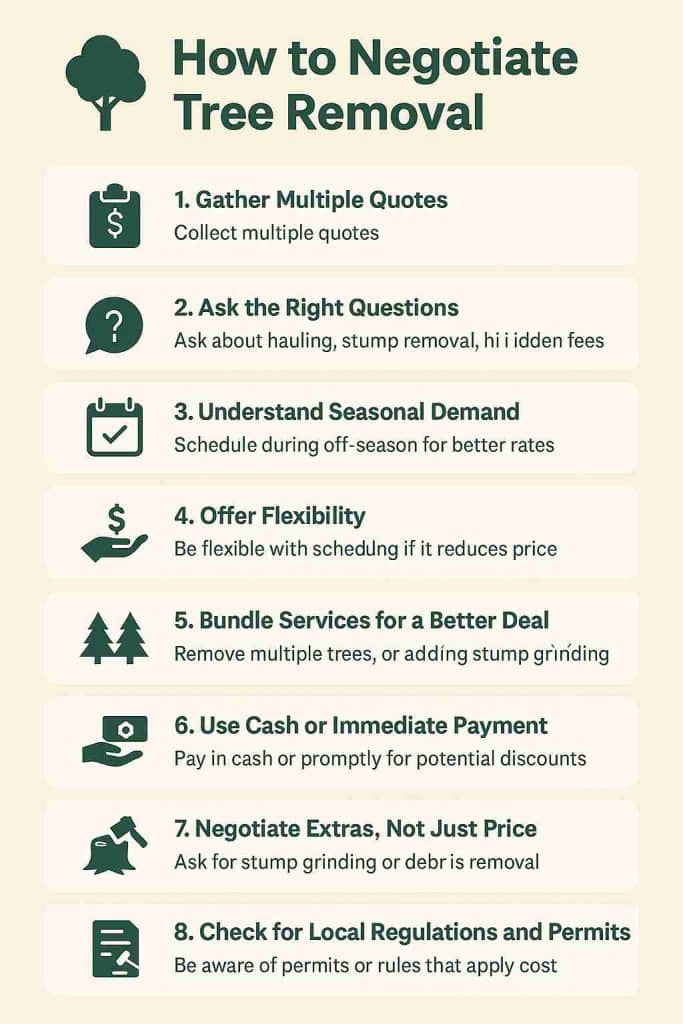
Step 4: Offer Flexibility
Flexibility is a powerful tool when negotiating. Tree service companies often have tight schedules. If you let them know you are willing to wait until they are already in your neighborhood or can fit the job between larger projects, you may get a lower rate.
For example, you can say: “If you’re already in the area next week, I’m happy to schedule then if it helps reduce the cost.”
This approach shows you are reasonable and makes it easier for the contractor to offer a discount without losing money.
Step 5: Bundle Services for a Better Deal
If you have more than one tree that needs attention, consider bundling the services. Companies are more willing to lower the price when they can do multiple jobs at once.
For example:
- Removing two trees at the same time
- Adding stump grinding to the project
- Trimming nearby branches while they have equipment on site
Bundling services saves the company time and setup costs, which can lead to lower overall pricing for you.
Step 6: Use Cash or Immediate Payment
Another way to negotiate tree removal is by offering cash payment or immediate payment. Many contractors prefer quick payment without waiting for checks to clear or invoices to process. This can give you bargaining power.
You might say: “If I pay in cash at the end of the job, can you give me a discount?”
Even a small 5–10% reduction is worth asking for, especially if the project costs thousands of dollars.
Step 7: Negotiate Extras, Not Just Price
Sometimes the price itself is hard to lower, but you can negotiate added value. For example:
- Free stump grinding
- Cutting logs into firewood
- Removing extra debris from your yard
- Adding a tree health inspection
If a company can’t lower their base rate, ask for one of these extras to be included. You’ll still get more value for the same cost.
Step 8: Check for Local Regulations and Permits
In some areas, permits are required for tree removal, especially for large or protected species. Make sure you ask who is responsible for getting permits—the homeowner or the contractor. If the contractor handles it, this could be an extra fee.
Knowing the permit process helps you avoid surprise costs and gives you room to negotiate by saying: “I’ll handle the permit myself if that reduces the total price.”
Step 9: Avoid Common Mistakes When Negotiating
While negotiating is smart, some mistakes can actually cost you more in the long run. Here are a few to avoid:
- Choosing the cheapest quote without checking reviews – A low price means nothing if the company is unqualified or unsafe.
- Not getting everything in writing – Verbal agreements can lead to confusion later. Always get a written contract.
- Ignoring insurance coverage – Make sure the company has liability and worker’s compensation insurance. Otherwise, you could be responsible if someone gets hurt.
- Paying upfront – Reputable companies don’t ask for full payment before work is completed.
Step 10: How to Talk to Contractors with Confidence
The way you approach the conversation matters. Stay polite, respectful, and firm. You don’t need to demand or argue. Instead, use phrases like:
- “I’ve received a few other quotes, and I’d like to see if you can match or come close to them.”
- “If we add stump grinding, can you give me a package discount?”
- “I can pay in cash if that helps lower the cost.”
These statements show that you are serious but also open to compromise, which often leads to better deals.
The End Results: What You Gain from Negotiating
By taking the time to learn how to negotiate tree removal, you’ll not only save money but also protect yourself from hidden fees and poor service. The end results include:
- A fair price that fits your budget
- Clear expectations about the work being done
- Confidence that you’re hiring a safe, professional crew
- Extra value through bundled services or added perks
Negotiation may feel uncomfortable at first, but most contractors expect it. With the right approach, you can secure a better deal without sacrificing quality.
Conclusion
Learning how to negotiate tree removal can save you money, give you peace of mind, and ensure the work is done safely. The process starts with gathering quotes, asking the right questions, and understanding what factors affect the price. From there, you can use smart strategies like scheduling in the off-season, offering flexibility, bundling services, and negotiating for extras.
The result is not just a lower bill, but a smoother, more transparent experience that leaves you confident in your choice. With the right approach, you can protect both your property and your wallet when it’s time to remove a tree.
FAQs
Can I really negotiate tree removal costs?
Yes. Most tree services have some flexibility, especially if you’re prepared with multiple quotes and clear expectations.
How much can I save by negotiating?
Savings vary, but homeowners often save 10–20% through smart negotiation.
Is it cheaper to remove a tree myself?
DIY removal is dangerous and not recommended. Professional removal ensures safety and liability protection.
Do tree companies charge extra for stump removal?
Often yes. Stump grinding is usually a separate service, so ask if it’s included.
When is the cheapest time to remove a tree?
Late winter or early spring is often cheaper since demand is lower.
Should I get a written contract?
Absolutely. Always get the final agreement in writing to avoid confusion or hidden fees.
What if my city requires a permit?
Ask who handles the permit. If you can manage it yourself, you may save on contractor fees.