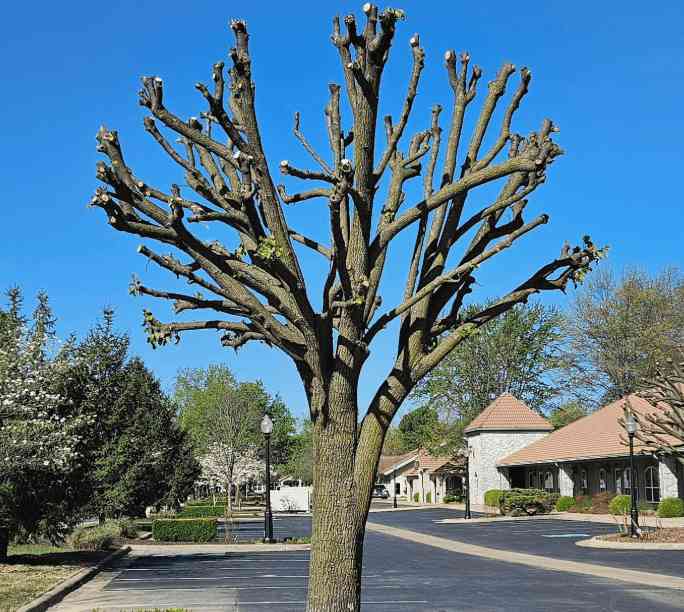
Tree topping vs crown reduction comes down to one major difference: topping cuts branches back to stubs in a harmful way, while crown reduction carefully shortens them to healthy side branches to keep the tree strong and natural-looking. Topping is often considered damaging, leaving trees stressed, weak, and unsafe. Crown reduction, on the other hand, is a professional pruning method that reduces a tree’s size while protecting its health, beauty, and safety.
In this guide, you’ll learn exactly why topping harms trees, how crown reduction works, and which method is the right choice for keeping your trees safe, attractive, and long-lasting.
Table of Contents
What Is Tree Topping?
Tree topping is the practice of cutting back large branches or the main trunk to stubs or small side branches. People often choose topping because it seems like a quick way to shorten a tree that feels “too tall.”
Unfortunately, topping is one of the most damaging things you can do to a tree. When large sections of the canopy are cut off, the tree loses much of its ability to produce food through photosynthesis. To survive, it pushes out many weak shoots that grow fast but are poorly attached. This not only makes the tree look unnatural but also creates safety hazards.
Problems Caused by Tree Topping
Tree topping may seem like a shortcut, but the long-term problems outweigh the short-term benefits:
- Stress and decline: Removing a large part of the canopy shocks the tree and weakens its natural defense system.
- Decay and disease: Large cuts expose the tree to pests, fungi, and rot.
- Unsafe regrowth: The new shoots that sprout after topping are weakly attached, making them more likely to break during storms.
- Shortened lifespan: Topped trees often die earlier because of stress and structural failure.
- Unattractive appearance: Topped trees lose their natural shape, making them look awkward or “butchered.”
What Is Crown Reduction?
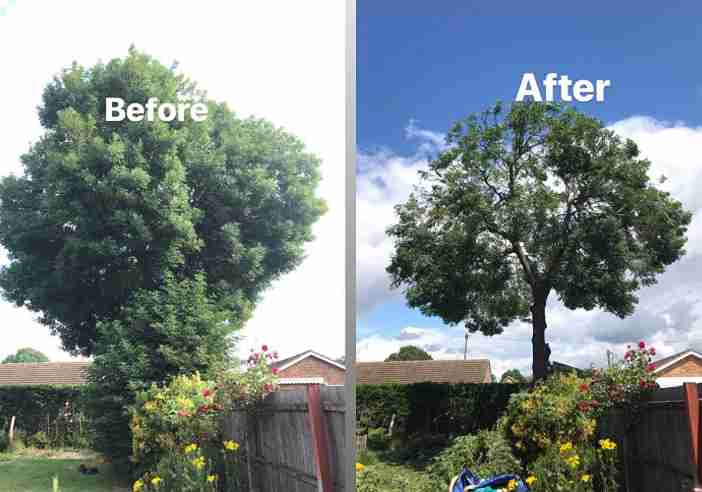
Crown reduction is a professional pruning method used to reduce the size of a tree while keeping its natural shape and health intact. Instead of cutting branches back to stubs, an arborist carefully shortens them by cutting to strong side branches.
This method removes weight from the top and sides of the canopy, reducing the risk of broken limbs in storms. Unlike topping, crown reduction preserves the tree’s ability to grow normally, heal properly, and stay healthy over time.
Benefits of Crown Reduction
Crown reduction provides several benefits when compared to topping:
- Better tree health: Cuts are made in a way that allows the tree to seal naturally, lowering the risk of decay.
- Stronger structure: By reducing weight strategically, the tree is less likely to split or drop heavy limbs.
- Natural shape maintained: Crown reduction preserves the tree’s natural beauty, making your yard look more attractive.
- Longer lifespan: Healthy pruning helps trees live longer and stay safer.
- Improved safety: Reducing the crown lowers the risk of branches falling on homes, cars, or power lines.
Tree Topping vs Crown Reduction: The Key Differences
It’s important to understand how these two practices compare:
| Factor | Tree Topping | Crown Reduction |
| Health impact | Damages tree, increases stress and decay | Protects health and encourages healing |
| Appearance | Leaves unnatural, stubby look | Maintains natural shape and beauty |
| Safety | Creates weak regrowth, higher risk of falling branches | Reduces risks with stronger structure |
| Longevity | Often shortens tree’s life | Helps tree live longer |
| Cost over time | Cheap initially but costly in repairs and removals | Slightly higher upfront but saves money long-term |
Why Some People Still Choose Tree Topping
Even with its risks, some homeowners still consider topping because:
- They want a fast way to reduce tree height.
- They’re worried about tall trees near power lines.
- They believe topping will stop growth (which it doesn’t, it often makes trees grow back faster and weaker).
While topping may seem like a quick fix, it’s rarely the right solution. In many areas, topping is even discouraged or restricted because of the long-term harm it causes.

When Crown Reduction Is the Best Choice
Crown reduction is especially helpful in these situations:
- Storm preparation: Reducing heavy limbs lowers the chance of storm damage.
- Overgrown trees near structures: If branches are getting too close to your roof, crown reduction can safely reduce their spread.
- Weak or leaning trees: By lightening the load on certain areas, crown reduction can help balance the tree.
- Preserving old trees: For mature trees you want to keep healthy, crown reduction is far better than topping.
The Cost of Tree Topping vs Crown Reduction
One reason homeowners choose topping is cost, it often looks cheaper at first. But let’s look deeper:
- Tree topping costs: Topping may have a lower upfront price, but the long-term expenses are higher. Weak regrowth means more frequent trimming, higher risk of property damage, and eventual tree removal.
- Crown reduction costs: This method may cost slightly more upfront because it requires skilled arborists. However, it extends the tree’s life, reduces risks, and prevents costly removals later.
In the long run, crown reduction saves you money while protecting your property and keeping your landscape attractive.
Safety Considerations
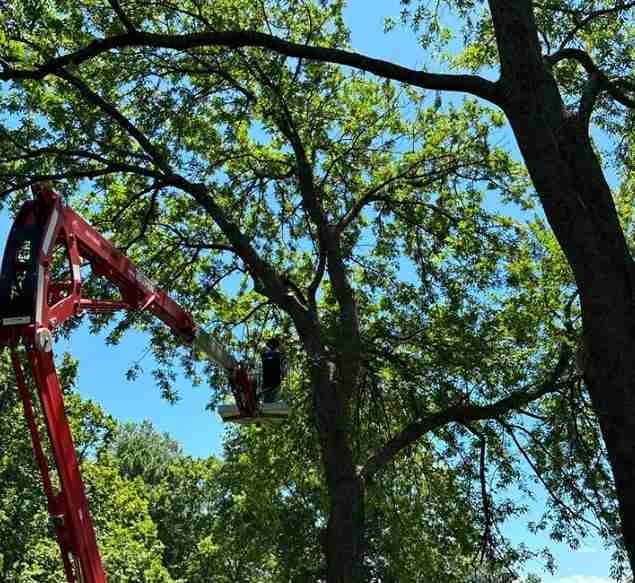
Both topping and crown reduction involve working at heights and handling large branches. Attempting these tasks without proper training and equipment can be dangerous. For your safety and your tree’s health, it’s best to rely on certified arborists.
Professional tree care ensures cuts are made correctly, with the right tools and techniques, reducing risks to both people and property.
Environmental and Neighborhood Impact
Trees are more than just decorations, they provide shade, clean the air, and add beauty to neighborhoods. When trees are topped, they often decline or die, removing these benefits. Crown reduction, on the other hand, supports a healthy environment by preserving strong, thriving trees.
Healthy, well-maintained trees can also boost property value and create a more welcoming community atmosphere.
Final Thoughts: The Better Choice
When weighing tree topping vs crown reduction, the choice is simple. Tree topping may seem like a quick fix, but it damages trees, increases safety hazards, and leads to higher costs over time. In contrast, crown reduction is a proven method that reduces size safely while protecting the tree’s health, structure, and natural beauty.If your goal is to preserve your property’s value, improve safety, and enjoy thriving trees for years to come, crown reduction is the clear winner. Choosing this method today means fewer risks, less maintenance, and a landscape that stays strong and appealing long into the future.
FAQs
What is the difference between tree topping and crown reduction?
Tree topping cuts branches back to stubs, which harms the tree and causes weak regrowth. Crown reduction carefully shortens branches to healthy side shoots, keeping the tree strong, safe, and natural-looking.
Is tree topping bad for trees?
Yes. Tree topping stresses the tree, exposes it to decay, and leads to weak branches that are more likely to break during storms. It can also shorten the tree’s lifespan.
Why is crown reduction better than topping?
Crown reduction reduces the size of a tree without damaging it. Cuts are made to healthy side branches, which keeps the tree’s natural shape, lowers the risk of falling limbs, and helps the tree live longer.
Does tree topping stop a tree from growing?
No. Topping does not stop growth. Instead, it causes the tree to grow back faster with many weak shoots that are poorly attached and more dangerous.
When should crown reduction be used?
Crown reduction is best when a tree has become too large, poses a risk to nearby structures, or needs to be lightened before storms. It maintains safety while preserving the tree’s health and beauty.
Is tree topping ever acceptable?
Tree topping is almost never recommended. In rare emergencies where a hazard must be removed immediately, topping may be used, but it should not be considered a standard tree care method.
How often should crown reduction be done?
Most trees only need crown reduction every few years. The exact timing depends on the species, growth rate, and location. A certified arborist can recommend the best schedule for your trees.